

CRA Reporting Meets Reality: The French Supermarket Refrigeration Cyberattack
How the October 2026 refrigeration cyberattack highlights activelyexploited vulnerabilities, embedded system security, and the EU Cyber Resilience Act'snew reporting obligations.
On 11 September 2026, a major milestone of the EU Cyber Resilience Act (CRA) came into effect: manufacturers became legally required to report actively exploited vulnerabilities and severe incidents affecting the security of their products with digital elements.
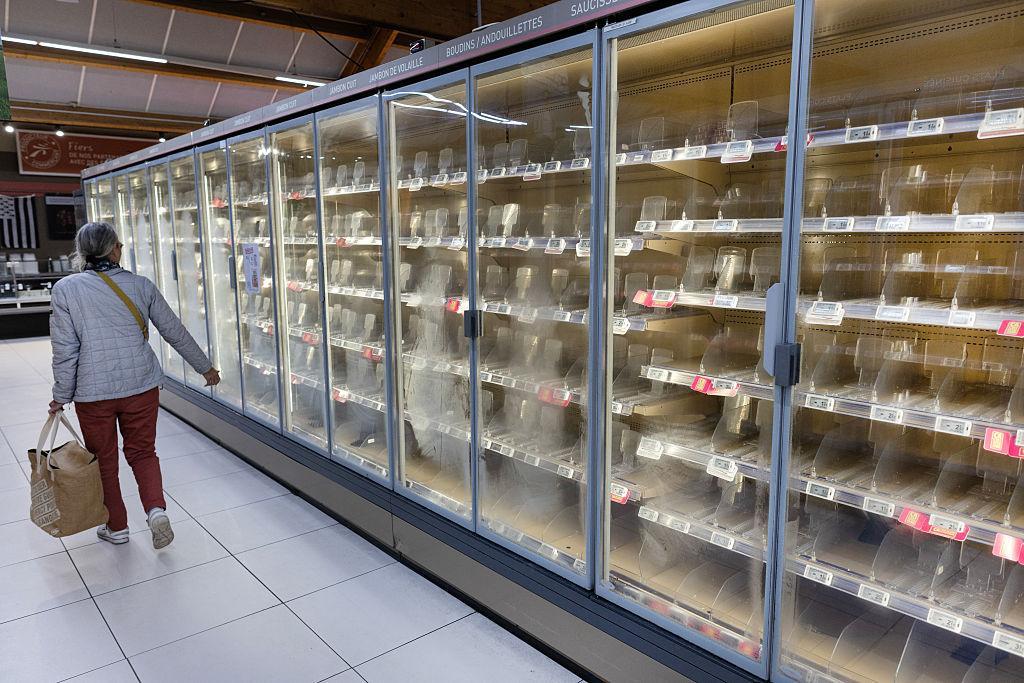
Just one month later, on 11–12 October 2026, a large-scale cyberattack disrupted refrigeration systems across hundreds of supermarkets in France.
Attackers reportedly manipulated refrigeration controllers remotely, triggering abnormal defrost cycles and causing temperatures to rise to as much as 50°C in some locations. The consequences included spoiled food, equipment damage, operational disruption, and substantial financial losses.
This was not a conventional IT security incident involving stolen passwords or encrypted files. It demonstrated how cyberattacks against embedded systems and operational technology (OT) can directly manipulate physical processes.
The timing makes this incident particularly significant: the CRA’s mandatory vulnerability reporting framework was already active when the attack occurred.
Although the precise exploitation method and any CRA notifications submitted in connection with the incident have not been publicly confirmed, the case provides a powerful illustration of why the CRA’s reporting requirements matter.
It also raises an important question for manufacturers:
If attackers exploit a vulnerability in your connected product tomorrow, can your organisation detect, assess, mitigate, and report it within the CRA’s deadlines?
1. The CRA’s Vulnerability Reporting Obligations Are Now Active
While most of the CRA’s broader cybersecurity requirements become applicable on 11 December 2027, its mandatory vulnerability and incident reporting obligations have applied since 11 September 2026.
Under Article 14, manufacturers must report:
- Actively exploited vulnerabilities: Vulnerabilities in products with digital elements for which there is reliable evidence of malicious exploitation.
- Severe incidents: Incidents having an impact on the security of products with digital elements that meet the CRA’s applicable severity criteria.
These reporting obligations operate through the CRA Single Reporting Platform (SRP), established and managed by ENISA.
For reportable actively exploited vulnerabilities, the regulatory timeline includes:
Within 24 Hours — Early Warning
Manufacturers must submit an early warning without undue delay and, in any event, within 24 hours of becoming aware of the actively exploited vulnerability.
Within 72 Hours — Vulnerability Notification
Manufacturers must provide a more detailed notification, including available information about the affected product, vulnerability, exploitation, and potential impact.
Within 14 Days After a Corrective or Mitigating Measure Becomes Available — Final Report
Manufacturers must submit a final report covering the vulnerability, its impact, and the corrective or mitigating measures made available.
For reportable severe incidents, the 24-hour and 72-hour stages also apply, but the final report deadline is generally one month after the 72-hour incident notification.
Importantly, these deadlines are linked to awareness of the reportable event, rather than the date on which an attack originally occurred.
The CRA therefore requires more than vulnerability detection. It requires a coordinated operational capability to investigate, assess, communicate, and respond within legally defined timeframes.
2. What Happened in the French Supermarket Cyberattack?
The incident attracted international media attention, including coverage by BBC News on 12 October 2026.
BBC News: Fridges in French supermarkets hit by cyber attack
Source: BBC News, 12 October 2026.
During the night of 11–12 October 2026, attackers reportedly manipulated refrigeration management systems used by multiple supermarket chains in France.
Affected retailers reportedly included Intermarché, Carrefour, Coopérative U, Monoprix, and E.Leclerc.
The attackers interfered with the normal operation of refrigeration equipment by changing temperature-related settings and manipulating defrost functions.
Under normal conditions, an automatic defrost cycle temporarily interrupts cooling to remove ice from refrigeration equipment.
In the reported attacks, these functions were abused to cause prolonged heating, disrupting the cold chain and rendering food products unsafe for sale.
Reported consequences included:
- Refrigeration temperatures rising to approximately 50°C in some affected stores
- Extended defrost cycles and delayed detection
- Significant quantities of fresh and frozen food being discarded
- Damage to refrigeration equipment
- Operational disruption and substantial financial losses
The incident demonstrated that an attacker does not necessarily need to destroy or disable a device to cause significant damage.
Manipulating a legitimate function of a connected product can be enough to create serious physical and commercial consequences.
The French refrigeration incident is the primary technical case examined here. Reports of other cybersecurity incidents affecting European retailers should not be assumed to involve the same attack or vulnerability without supporting evidence.
3. How Could Refrigeration Controllers Be Compromised?
The affected refrigeration environments included controllers associated with the Danfoss AK-SM and AK-SC product families. Other reported attacks also involved Dixell refrigeration management equipment.
These devices are far more sophisticated than traditional thermostats.
Modern refrigeration management controllers may include:
- Embedded Linux operating systems
- Web-based management interfaces
- Remote configuration and monitoring capabilities
- Network APIs
- Temperature and defrost scheduling functions
- Integration with external maintenance and management services
These capabilities provide significant operational benefits, but they also introduce cybersecurity risks.
The available technical research highlights several possible weaknesses that could have contributed to attacks against exposed refrigeration controllers.
The exact intrusion method used in the October 2026 attacks has not been conclusively established publicly. The following vulnerabilities represent documented technical exposure and plausible attack scenarios, not confirmed attribution of a specific CVE to the incident.
3.1 Internet-Exposed Management Interfaces
One of the most significant security concerns was the accessibility of refrigeration management interfaces from the public internet. Following the incident, security researchers identified thousands of internet-accessible refrigeration controllers.
In some environments, remote connectivity had been enabled to allow external maintenance providers to monitor or configure refrigeration equipment. However, without appropriate access restrictions, network segmentation, and authentication controls, these interfaces could become entry points for attackers.
The problem is particularly serious when embedded devices are treated as operational equipment rather than as security-sensitive connected systems.
3.2 Authentication Bypass Through a Date-Based Maintenance Code
Previous security research identified authentication weaknesses affecting certain Danfoss refrigeration controllers.
One particularly notable weakness involved a maintenance authentication mechanism commonly described as a “code of the day.”
Rather than relying exclusively on the device owner’s configured administrator credentials, this mechanism could allow authentication using a code derived from the device’s date.
Researchers demonstrated that weaknesses in this mechanism could enable unauthorised administrative access.
In the AK-SM 800A product family, Claroty Team82 disclosed:
- CVE-2025-41450: Authentication bypass vulnerability, with a CVSS score of 8.2.
The security implication is significant.
If an attacker can bypass authentication and obtain administrative privileges, they may be able to manipulate legitimate refrigeration management functions without needing to compromise the underlying operating system.
3.3 Command Injection and Remote Code Execution
Claroty’s research also identified additional vulnerabilities affecting the AK-SM 800A platform:
- CVE-2025-41451: An authenticated command injection vulnerability potentially allowing remote code execution.
- CVE-2025-41452: A vulnerability involving web server configuration manipulation that could cause denial of service.
In a potential attack chain, an authentication bypass could provide access to management functions, while a command injection vulnerability could enable deeper system compromise.
However, remote code execution is not necessarily required to cause physical disruption.
Once an attacker obtains sufficient administrative access, legitimate device functionality may already provide the ability to manipulate operational settings.
3.4 Abuse of Legitimate Device Functions
Perhaps the most important technical lesson is that the final malicious action may not itself require exploiting a software vulnerability.
Functions such as changing temperature setpoints, initiating defrost cycles, modifying schedules, or disabling alarms are legitimate administrative capabilities.
The security failure occurs when an unauthorised actor gains the ability to use them.
This distinction matters for both cybersecurity investigations and regulatory reporting.
An attack involving exploitation of a product vulnerability may trigger the CRA’s actively exploited vulnerability reporting obligations, while other incidents must be assessed against the CRA’s severe incident criteria.
The regulatory classification depends on the verified facts, not simply on whether the attack caused physical damage.
4. Why This Incident Matters Under the CRA
The October 2026 refrigeration attacks occurred after the CRA’s Article 14 reporting obligations became applicable.
This creates a particularly relevant real-world scenario for manufacturers of products with digital elements.
Consider a manufacturer whose connected refrigeration controller is affected by a vulnerability that attackers are actively exploiting.
If the manufacturer becomes aware of reliable evidence of malicious exploitation, and the product and circumstances fall within the applicable CRA requirements, the manufacturer must evaluate and fulfil its reporting obligations.
The manufacturer cannot simply wait until every technical detail has been confirmed before beginning the reporting process.
The 24-hour early warning exists precisely because complete technical information may not yet be available.
The subsequent notification and final report allow additional findings and corrective measures to be communicated.
For a manufacturer facing a comparable event, critical questions would include:
- Which product models and firmware versions are affected?
- Is there reliable evidence that a vulnerability is being actively exploited?
- Are the affected products within the scope of the applicable CRA reporting obligations?
- Which markets and customers may be exposed?
- Can the manufacturer identify the vulnerable software component or configuration?
- Are temporary mitigations or security updates available?
- Can the manufacturer meet the reporting deadlines through the ENISA Single Reporting Platform?
The French case highlights the importance of answering these questions quickly.
An important distinction: Public reporting about this attack does not establish that the relevant manufacturer submitted a CRA notification, nor does it conclusively identify the exploited vulnerability. The incident illustrates a potentially reportable scenario rather than a verified CRA reporting precedent.
Nevertheless, the operational lesson is clear:
The CRA’s reporting deadlines are no longer future obligations. Manufacturers must be prepared to apply them to real cybersecurity events today.
5. Legacy Products and the Challenge of Vulnerability Management
Another important aspect of the French refrigeration attacks was the presence of older controllers and outdated firmware.
The affected environments reportedly included equipment from product families such as:
- Danfoss AK-SM 800: A legacy product family that reached end of life in 2021.
- Danfoss AK-SC 355: An older product family that reached end of life in 2016.
- Danfoss AK-SM 800A: A newer product family for which security vulnerabilities and firmware updates had previously been disclosed.
This highlights a common problem in embedded and industrial environments.
Products may remain operational for many years after their original deployment, sometimes long after regular security maintenance has ended.
A device can continue performing its intended physical function while becoming increasingly exposed to cybersecurity threats.
For manufacturers, this reinforces the importance of:
- Establishing clear security support periods
- Maintaining accurate inventories of supported product versions
- Monitoring newly discovered vulnerabilities
- Providing security updates and mitigation guidance
- Communicating end-of-support information
- Supporting secure deployment and decommissioning practices
The CRA introduces lifecycle cybersecurity requirements that make these activities central to product security management.
Although the CRA’s broader requirements have a separate application date, the October 2026 incident demonstrates why manufacturers should not delay building these capabilities.
6. Third-Party Maintenance and Remote Access: A Critical Security Boundary
Refrigeration management systems are frequently installed, configured, and maintained by specialised external service providers.
Remote maintenance enables efficient operations, but it can also create security risks when access is poorly controlled.
In many environments, manufacturers, equipment owners, system integrators, and maintenance providers share responsibilities for different parts of the operational infrastructure.
Potential weaknesses include:
- Publicly exposed management interfaces
- Shared or default administrative credentials
- Unrestricted third-party remote access
- Missing multi-factor authentication
- Insufficient access logging
- Poor visibility into deployed firmware versions
- Lack of coordination during vulnerability disclosure and incident response
Under the CRA, manufacturers must understand the cybersecurity risks associated with their products and applicable dependencies.
This makes clear contractual responsibilities and effective coordination with suppliers and service providers essential.
For example, manufacturers should establish processes for obtaining technical information, identifying affected components, coordinating security updates, and supporting incident investigations.
A manufacturer cannot build an effective 24-hour reporting capability if critical security information takes several days to reach the responsible team.
7. What Manufacturers Should Learn from This Attack
The French refrigeration cyberattack provides several practical lessons for manufacturers developing connected products, embedded systems, and industrial devices.
7.1 Secure Products Beyond Their Intended Functionality
Security risk assessments must consider not only whether a device performs its intended functions correctly, but also how those functions could be abused.
A defrost function is legitimate. Unauthorised control of that function can be dangerous.
Threat modelling should therefore include misuse scenarios, privilege escalation, authentication bypass, and manipulation of safety- or operation-critical settings.
7.2 Assess the Complete Product Ecosystem
Cybersecurity risks may originate from embedded firmware, network interfaces, remote management platforms, cloud services, mobile applications, or third-party integrations.
Manufacturers should assess the relevant digital elements and dependencies that contribute to their product’s functionality and security.
7.3 Implement Continuous Vulnerability Monitoring
Manufacturers need processes to identify, verify, prioritise, and remediate vulnerabilities throughout the applicable product support period.
This includes monitoring vulnerability disclosures, assessing affected product versions, and maintaining visibility into software components and dependencies.
7.4 Establish a Coordinated Vulnerability Disclosure Process
Security researchers, customers, suppliers, and external partners must have a reliable way to report potential vulnerabilities.
A structured Vulnerability Disclosure Program (VDP) helps manufacturers receive reports, coordinate technical investigation, and determine whether regulatory reporting obligations have been triggered.
7.5 Prepare for the 24-Hour and 72-Hour Reporting Deadlines
Manufacturers should define internal procedures for:
- Identifying potentially reportable events
- Assessing evidence of active exploitation
- Determining affected products and markets
- Escalating findings to the appropriate security and compliance teams
- Preparing and submitting regulatory notifications
- Tracking corrective measures and final reporting requirements
These processes should be tested before an actual security event occurs.
7.6 Monitor for Operational Abuse, Not Just Software Exploits
Traditional vulnerability scanning alone may not detect misuse of legitimate device functions.
Connected products and OT environments may also require monitoring for unusual configuration changes, unexpected administrative activity, abnormal operational commands, and unauthorised remote access.
Independent monitoring and appropriate logging can help detect attacks before they develop into physical damage.
8. How CyberWhiz Can Help
At CyberWhiz, we help manufacturers strengthen cybersecurity across the complete product ecosystem, including embedded devices, mobile applications, cloud infrastructure, APIs, and third-party components.
Our Purple Team, Red Team, and Blue Team specialists support manufacturers in addressing both the technical and operational requirements associated with the EU Cyber Resilience Act.
Our services include:
- CRA Gap Analysis and Risk Assessment: Identifying applicable cybersecurity requirements, evaluating product risks, and developing actionable security improvement plans.
- Embedded and OT Security Assessment: Assessing firmware, device interfaces, authentication mechanisms, remote access, and operational attack scenarios.
- Penetration Testing and Security Validation: Identifying vulnerabilities across connected products, mobile applications, APIs, and cloud environments.
- Vulnerability Management and Coordinated Disclosure: Supporting vulnerability intake, validation, prioritisation, remediation coordination, and disclosure processes.
- CRA Vulnerability Reporting Readiness: Helping manufacturers establish workflows for identifying potentially reportable events, coordinating technical evidence, and preparing regulatory notifications.
- Product Lifecycle and Supply Chain Security: Supporting software component visibility, supplier cybersecurity requirements, security updates, and vulnerability management throughout the product lifecycle.
Our CyberWhiz VDP Manager helps manufacturers establish structured vulnerability disclosure and handling workflows, improving coordination between security researchers, manufacturers, and relevant stakeholders.
The October 2026 refrigeration cyberattack demonstrates that cybersecurity weaknesses in connected products can have immediate physical and commercial consequences.
The CRA’s vulnerability reporting obligations are already active. The question is no longer whether manufacturers need to prepare, but whether their existing processes can respond quickly enough when exploitation occurs.
From vulnerability discovery to regulatory reporting, cybersecurity readiness must be operational, not theoretical.
Contact our team at [email protected] to discuss your CRA readiness, embedded product security, and vulnerability reporting capabilities.
References
- European Commission — CRA Reporting Obligations
- ENISA — CRA Single Reporting Platform FAQ
- BBC News — Fridges in French supermarkets hit by cyber attack (12 October 2026)
- BleepingComputer — Cyberattack Shuts Down Refrigerators at French Supermarkets
- Claroty Team82 — Freeze the Controller, Defrost the Food
- CISA — Danfoss AK-SM 8xxA Series Security Advisory
- Synacktiv — Danfoss Authentication Bypass Research
- Industrial Cyber — French Supermarket Cyberattack Exposes Risks of Unsecured Remote Access