
Preparing IoT Products for the Quantum Era: Why Post-Quantum Cryptography Can't Wait
The Countdown Already Started
Quantum computing is often perceived as a future technology and it’s been omitted up to recent years. For IoT manufacturers, it is no more.
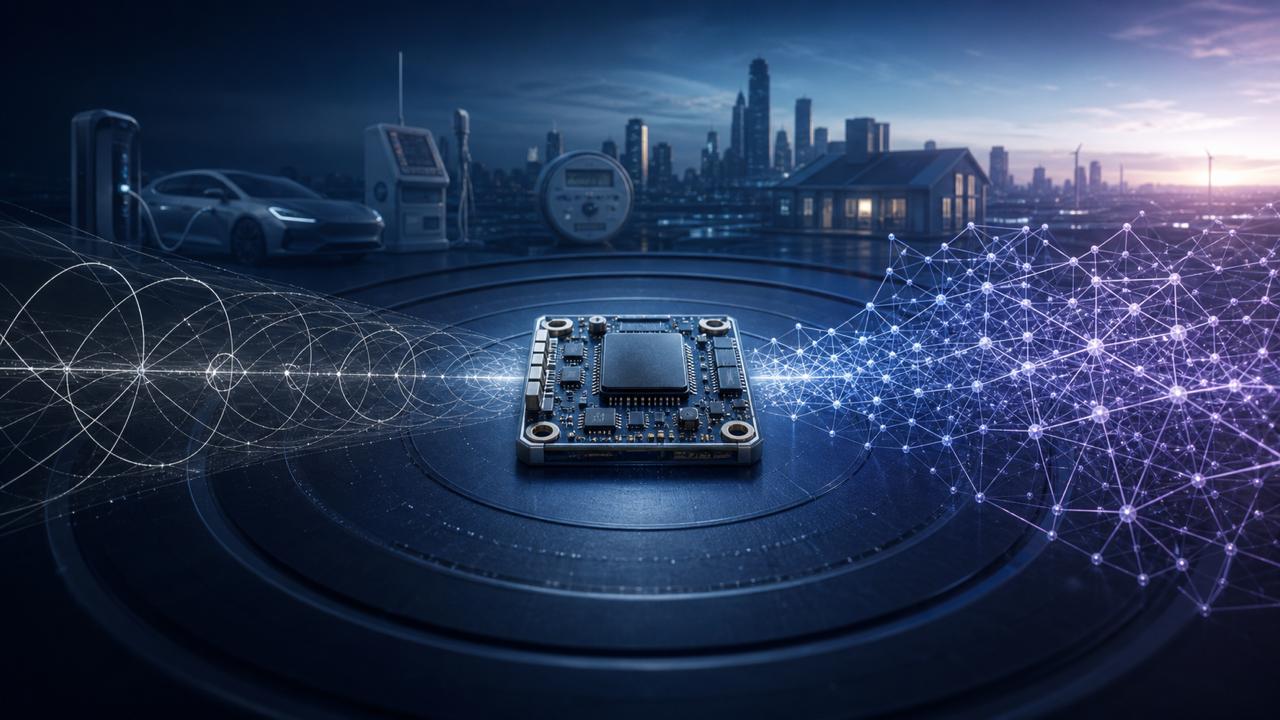
The devices being designed today will likely remain deployed for 10-20 years. EV charging stations, smart home components, smart meters, medical devices, and connected vehicles all share one characteristic: they need to be secure against today’s and tomorrow’s attacks.
While practical cryptographically relevant quantum computers are still under development, the transition to Post-Quantum Cryptography (PQC) has already begun. Governments, standards organizations, and technology providers are progressing in PQC today because waiting until quantum computers is too late.
What Is Post-Quantum Cryptography?
Post-Quantum Cryptography (PQC) is a new generation of public-key cryptography scheme designed to remain secure against both classical and quantum computers.
Following years of evaluation, NIST selected and standardized three core algorithms:
- •ML-KEM (FIPS 203) – quantum-resistant key establishment
- •ML-DSA (FIPS 204) – quantum-resistant digital signatures
- •SLH-DSA (FIPS 205) – hash-based digital signatures for specialized use cases
These algorithms will gradually replace today's RSA and Elliptic Curve Cryptography (ECC), which had been shown to be vulnerable to Quantum computing algorithms.
IoT Is Different
Cloud applications can often be updated within hours.
IoT products cannot.
Many connected devices are deployed in remote or inaccessible locations so there may be no chance to upgrade the hardware, and even software. Also, a great portion of IoT devices are data providers and they need to run without interruption. So, replacing cryptographic algorithms after deployment can therefore become costly—or impossible.
This makes quantum readiness a product design consideration rather than a future maintenance task in IoT domain.
Greatest Risk: Harvest Now, Decrypt Later
While there is no Quantum computer available to decipher the traffic between two parties using modern cryptographic algorithms it is possible to record all the encrypted traffic to be deciphered when Quantum computers will be available. This is the greatest risk for organizations who is transmitting sensitive data, industrial telemetry, healthcare information, financial transactions etc.
How CyberWhiz Can Help?
CyberWhiz can help IoT device manufacturers by functioning on three pillars of IoT, edge, mobile, cloud. We help organizations to save data, time, cash and reputation by integrating Post Quantum Cryptography into the infrastructure from end to end.
Edge Security
Our embedded security specialists help manufacturers:
- •Assess existing cryptographic architectures
- •Integrate Secure Elements and Hardware Roots of Trust
- •Implement secure boot and authenticated OTA updates
- •Evaluate and optimize PQC implementations for resource-constrained devices
Mobile Security
We help ensure that mobile applications evolve alongside connected devices by providing:
- •Secure mobile SDK development
- •Mobile application hardening
- •Quantum-ready communication architectures
Cloud Security
Our cloud security capabilities include:
- •Hybrid and future PQC-ready TLS architectures
- •Certificate lifecycle management
- •Secure device identity services
- •Backend security for connected products